
Understanding the Supreme Court’s Tariff Decision — and What Tariffs Mean for the Economy
Trade policy has once again moved to the forefront of national conversation following a recent U.S. Supreme Court decision addressing presidential tariff authority. While headlines often frame tariffs in political terms, the underlying economic questions are broader and more complex.
To provide context, it is helpful to begin with a simple definition.

What Is a Tariff?
A tariff is a tax imposed by a government on goods imported from another country. The tariff is paid by the importing company when the goods enter the country. In practice, that cost is often passed along — partially or fully — to consumers through higher prices.
Governments use tariffs for several reasons. They may seek to protect domestic industries from foreign competition, raise revenue, encourage domestic production, or gain leverage in trade negotiations. In some cases, tariffs are justified on national security grounds.
Like most economic tools, however, tariffs involve trade-offs. Those trade-offs are at the center of recent policy debate.
The Supreme Court’s Decision: Reaffirming Constitutional Boundaries
In the recent case of Learning Resources, Inc. v. Trump, the Supreme Court ruled 6–3 that broad global tariffs imposed under the International Emergency Economic Powers Act (IEEPA) exceeded the authority granted to the president under that statute.
The majority opinion concluded that while certain powers can be delegated to the executive branch, the Constitution assigns the authority to levy taxes and tariffs to Congress. The Court found that the IEEPA did not clearly authorize sweeping tariff authority of the kind that had been exercised by the current administration.
Importantly, the decision focused on statutory interpretation and constitutional structure rather than the economic merits of tariffs themselves. The ruling reinforces the separation of powers — clarifying that expansive trade measures require clear congressional authorization.
The Court did not fully resolve practical questions such as the treatment of previously collected tariff revenues, and it leaves open the possibility that tariffs could be imposed under other, more specific statutory authorities.
The President’s Response and Potential Next Steps
In response to the ruling, President Trump publicly criticized the decision and indicated his administration would pursue alternative legal avenues to continue implementing trade measures.
Among the options discussed was Section 122 of the Trade Act of 1974, which permits temporary tariffs of up to 150 days under certain circumstances. The administration also signaled that other statutory authorities could be used to address trade imbalances or national security concerns.
As a result, while the Court clarified limits under one statute, the broader debate over executive trade authority and tariff policy is ongoing.
Trade Policy in Context: Lessons from NAFTA
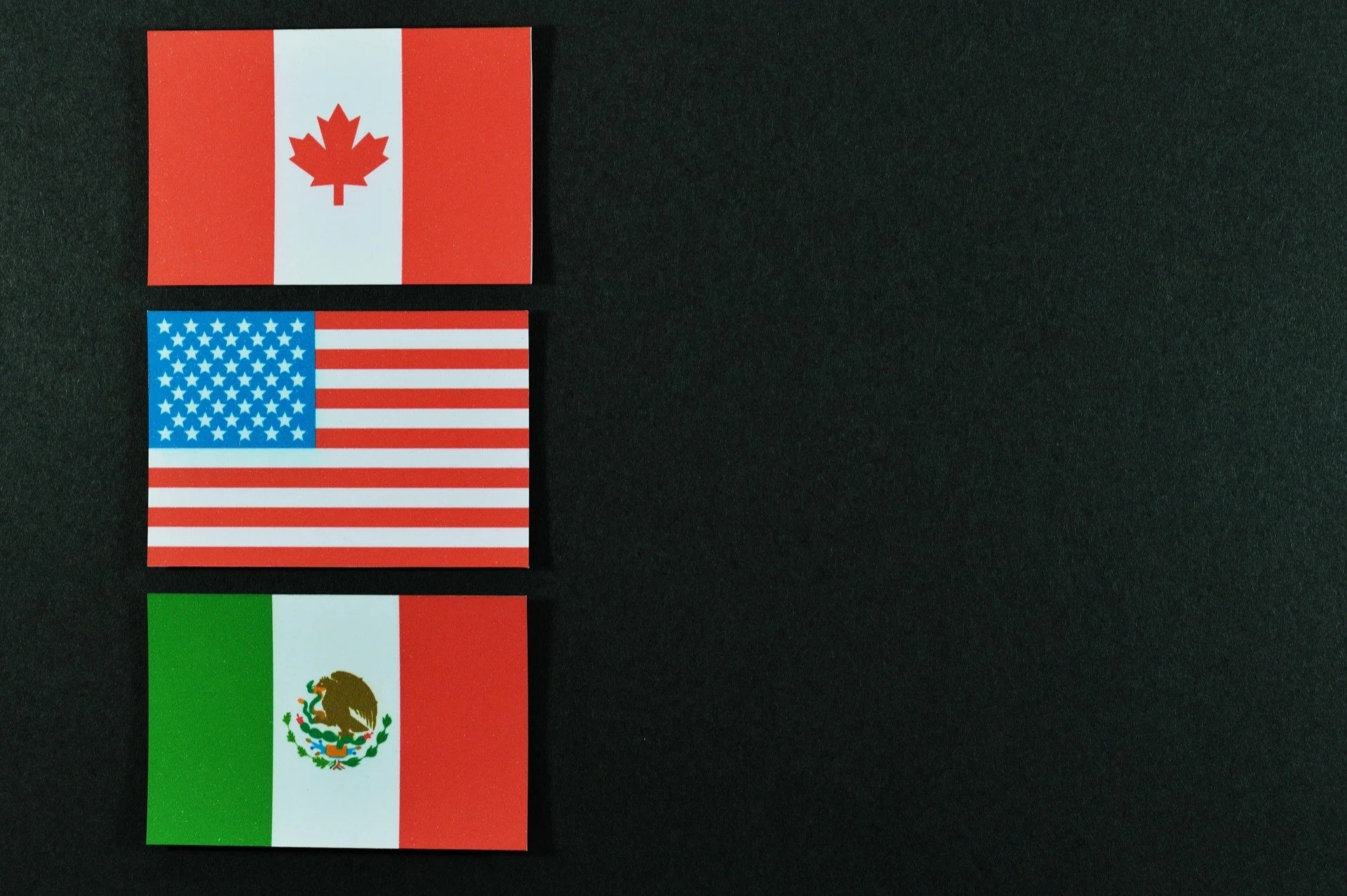
To understand today’s tariff debate, it is useful to consider the broader history of U.S. trade policy.
Free trade agreements such as the North American Free Trade Agreement (NAFTA), instituted in the early 1990s, were designed to reduce trade barriers, expand markets, and lower prices for consumers. In many respects, those goals were achieved. Cross-border investment increased, supply chains became more integrated, and consumers benefited from lower-cost goods.
At the same time, research from the early 2000s highlighted structural consequences that were not evenly distributed. Persistent trade deficits with certain partners contributed to manufacturing job displacement in specific regions. Wage pressures emerged in sectors exposed to global competition, particularly for workers without advanced education.
The broader lesson is not that free trade or tariffs are inherently good or bad. Rather, trade policy choices tend to create both benefits and costs — and those effects are often uneven across industries and communities.
How Tariffs Affect Consumers
From a practical standpoint, tariffs function similarly to a targeted consumption tax.
When an importer pays a tariff, that added cost often flows through the supply chain. Retailers may increase prices. Manufacturers may adjust margins. In some cases, companies absorb part of the cost; in others, consumers bear much of it.
The degree of pass-through depends on several factors:
Availability of domestic alternatives
Competitive pressures within the industry
Consumer sensitivity to price changes
If tariffs apply to widely used goods — such as electronics, vehicles, or household items — the cumulative effect can contribute to upward pressure on consumer prices. On a broad scale, this can modestly affect inflation, though the impact depends heavily on the scope and duration of the tariffs.
Consumers may respond by substituting toward domestically produced goods or lower-cost alternatives. However, such adjustments are not always immediate or cost-neutral.
How Tariffs Affect Domestic Manufacturers
For domestic producers competing directly with imports, tariffs can provide temporary relief from foreign competition. This may allow companies to increase prices, expand production, or invest in domestic capacity.
However, the situation is more nuanced for many U.S. manufacturers. Modern supply chains are deeply global. A significant number of domestic companies rely on imported raw materials, components, or intermediate goods. When tariffs raise input costs, those higher expenses can reduce profit margins or increase the final cost of American-made products.
In some cases, higher input costs can make U.S. exports less competitive abroad. If trading partners respond with retaliatory tariffs, export-oriented industries — including agriculture and manufacturing — may face additional headwinds.
As with most policy tools, the benefits and burdens vary by sector.
How Tariffs Affect Foreign Economies
Tariffs also influence the economies of targeted countries. Exporters facing reduced access to U.S. markets may experience declining sales and production. Industries heavily dependent on U.S. demand can feel significant strain.
At the same time, trade tensions often prompt retaliatory measures. These responses can create feedback loops that affect global supply chains, currency valuations, and investment flows.
Over time, sustained tariff policies may encourage companies to shift production to new regions, accelerating broader realignment in global trade patterns.

The Broader Trade-Offs
The ongoing debate over tariffs reflects competing economic priorities:
Protecting domestic industries versus maintaining low consumer prices
Supporting employment stability versus promoting global efficiency
Strengthening national security versus encouraging open markets
There is no trade framework without trade-offs. Free trade can lower prices and increase efficiency, but it can also accelerate structural change. Tariffs can support certain industries, but they may raise costs elsewhere.
The Supreme Court’s decision addresses who has authority to implement tariffs — not whether tariffs are economically beneficial. That economic discussion remains active and complex.
What This Means for Investors and Long-Term Planning
Trade policy developments can influence markets, particularly in industries directly affected by new measures. Periods of legal or political uncertainty may increase short-term volatility.
Historically, however, markets have adjusted over time to changes in trade regimes. Businesses adapt supply chains. Prices recalibrate. Investment patterns evolve.
For long-term investors, discipline remains the most important principle. Well-diversified portfolios are designed to navigate policy shifts, economic cycles, and geopolitical developments. Attempting to react to each headline can introduce more risk than stability.
As always, our focus remains on long-term fundamentals, thoughtful planning, and maintaining perspective during periods of uncertainty.
Final Thoughts
The Supreme Court’s tariff decision reinforces constitutional boundaries regarding trade authority. At the same time, the broader economic debate over tariffs and free trade continues.
Contrary to what the media leads us to believe; trade policy is rarely simple. It involves complex trade-offs that affect consumers, manufacturers, workers, and global markets in different ways.
Rather than viewing tariffs through a purely political lens, it can be helpful to recognize them as one of many economic tools —with both benefits and costs. As developments unfold, we will continue to monitor the implications and remain focused on what matters most: long-term financial stability and prudent decision-making.