SpaceX and Index Funds: What Investors Should Know
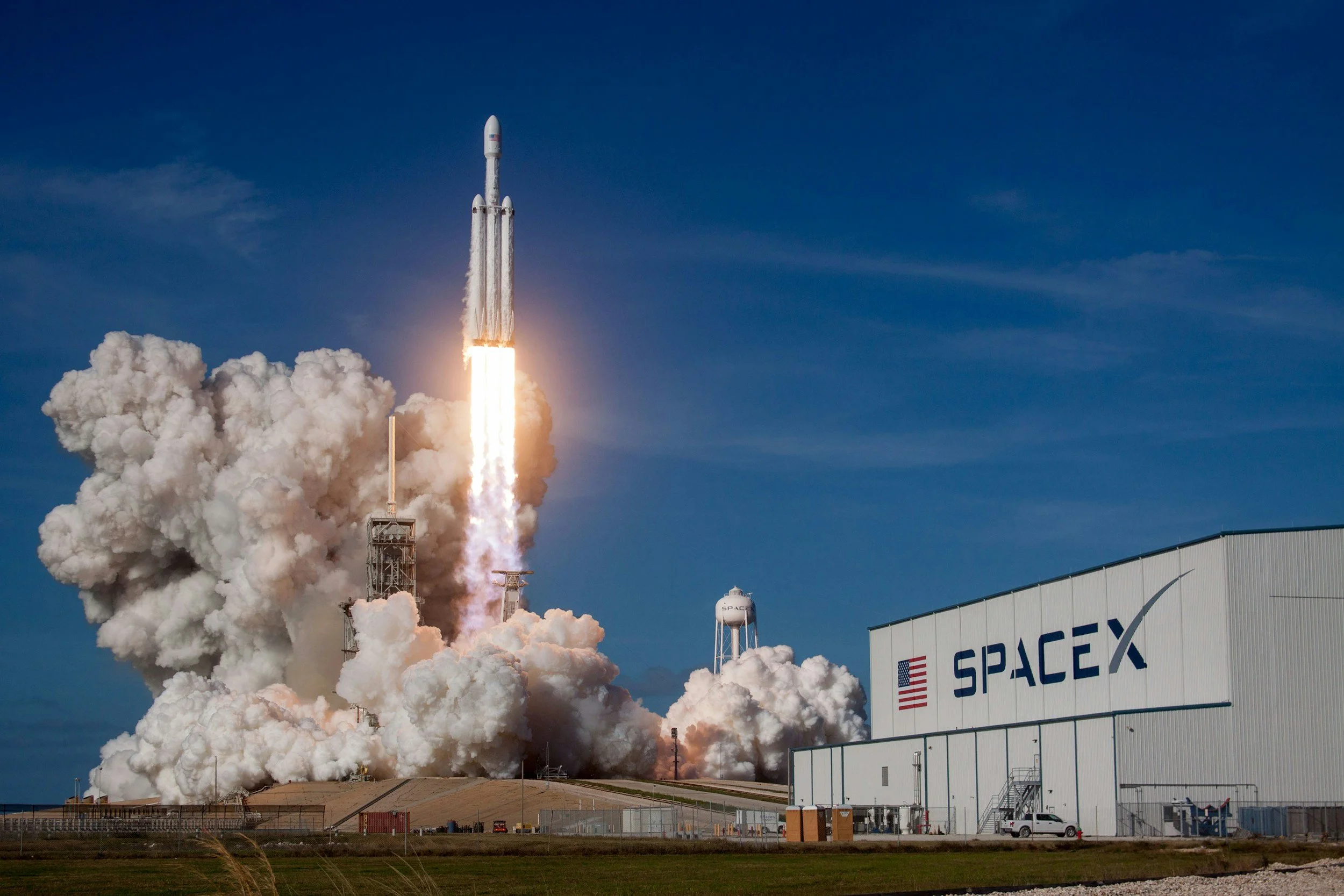
Not all index funds will add SpaceX in the same way or at the same time.
The anticipated SpaceX IPO has generated tremendous excitement among investors. Whether you're excited about the opportunity or concerned about its impact on your portfolio, it's important to understand that not all index funds will add SpaceX in the same way or at the same time. The good news is that most investors do not need to make immediate changes to their portfolios. Let's look at what is likely to happen and what it means for retirement accounts like the TSP and 401(k)s.
Not All Index Funds Will Add SpaceX
One of the biggest misconceptions about large IPOs is that they immediately become part of every major index fund. In reality, each index follows its own rules. Some Nasdaq-based indexes permit faster additions of newly public companies. Funds that track the Nasdaq 100, such as QQQ and QQQM, are expected to be among the first major index funds to incorporate SpaceX shares.
Other indexes move much more slowly. The S&P 500 has strict eligibility requirements regarding profitability and operating history. S&P Dow Jones Indices recently decided not to fast-track SpaceX into the S&P 500. Under the current rules, newly public companies must trade for at least 12 months and demonstrate profitability before they become eligible for consideration. This means SpaceX is unlikely to be considered for inclusion until at least one year after its IPO and only if it satisfies the S&P 500's financial viability requirements. The distinction matters because many retirement investors own S&P 500 funds rather than Nasdaq funds.
Some Funds Will Include SpaceX—Others Won't
Whether a fund adds SpaceX depends largely on the index it follows and how SpaceX is ultimately classified.
For example, sector-specific funds often have narrow mandates. The Technology Select Sector SPDR (XLK) focuses on companies classified within the information technology sector. As of now, analysts expect SpaceX to be classified as either a communications services company or an industrial company rather than a technology company, making inclusion in XLK unlikely.
Communication-sector funds may be a different story. If SpaceX receives a communications classification, funds such as Vanguard Communication Services ETF (VOX) could eventually become meaningful holders. Investors should also understand that funds tracking similar sectors may not behave the same way. For example, XLC draws its holdings from the S&P 500. If SpaceX is not added to the S&P 500, XLC would not hold it regardless of its sector classification.
Meanwhile, total market funds such as Vanguard Total Stock Market ETF (VTI) and many Russell-index-based funds are expected to add SpaceX relatively quickly because their indexes are designed to capture a broad representation of publicly traded U.S. companies.
The Initial Impact May Be Smaller Than Many Investors Expect
Although SpaceX is expected to be one of the largest companies to go public, its initial weight in index funds will likely be relatively small. That's because most indexes weight companies based on their publicly tradable shares rather than the company's total valuation. While SpaceX's overall valuation is substantial, only a portion of shares will be available for public trading immediately following the IPO. As a result, analysts currently estimate that SpaceX's initial weight in broad index funds could range from roughly 0.06% to 0.70%, depending on the index.
In practical terms, this means most diversified investors will gain only modest exposure initially.

As more shares become publicly available, SpaceX's weight within indexes could increase significantly.
SpaceX's Influence Could Grow Over Time
The story doesn't end with the IPO. As insider lock-up periods expire, additional shares may become available for public trading. These events often occur at various intervals following an IPO, allowing early investors and company insiders to gradually sell shares. As more shares become publicly available, SpaceX's weight within indexes could increase significantly. For example, if SpaceX is ultimately classified within the communications sector, some analysts believe it could eventually represent a substantial portion of communications-sector ETFs, potentially joining companies like Meta and Alphabet as one of the sector's largest holdings.
Why We Remain Cautious About IPO Investing
While SpaceX is a unique company with significant growth potential, investors should remember that IPOs often experience substantial volatility. Historically, many newly public companies experience meaningful price corrections during the months following their initial offering. Some underperform the broader market, while others experience significant swings as investors reassess expectations and valuation.
Several factors could contribute to heightened volatility for SpaceX:
A larger-than-normal retail investor allocation compared to many mega-cap IPOs
Significant investor enthusiasm and media attention
Questions surrounding long-term profitability
Dependence on future growth expectations
Delayed eligibility for inclusion in the S&P 500
Another factor investors should understand is that SpaceX's story has evolved beyond rockets and satellite communications. In early 2026, SpaceX completed the acquisition of artificial intelligence company xAI in a transaction reportedly valued at approximately $250 billion. As a result, investors are now evaluating not only the future of Starlink and SpaceX's launch business, but also the company's investments in artificial intelligence and related technologies.
While these initiatives may create significant opportunities, the long-term value of emerging AI applications remains uncertain. As with any rapidly developing technology, investor expectations can change quickly as new information becomes available.
One reason S&P 500 eligibility matters is that inclusion often creates additional demand from index funds and institutional investors. Under current S&P rules, newly public companies must trade for at least 12 months and meet profitability requirements before becoming eligible for consideration. Until a company becomes eligible and is ultimately selected for inclusion, its share price may be more heavily influenced by investor sentiment and market expectations.
For these reasons, we generally prefer to allow newly public companies time to establish a trading history before making concentrated investments. We believe that successful long-term investing is less about chasing the newest opportunity and more about maintaining a disciplined strategy aligned with your goals, risk tolerance, and time horizon.

For most retirement investors, the immediate impact of the SpaceX IPO is likely to be limited.
What This Means for Your TSP and 401(k)
For most retirement investors, the immediate impact of the SpaceX IPO is likely to be limited.
The core funds within the Thrift Savings Plan (TSP) are not expected to gain meaningful exposure to SpaceX anytime soon. The C Fund tracks the S&P 500 Index, and because SpaceX is not expected to be eligible for S&P 500 consideration for at least 12 months after its IPO—and only if it meets the index's profitability requirements—the C Fund will not immediately hold SpaceX shares. The S Fund tracks smaller U.S. companies and would not be expected to hold SpaceX given its size. The I Fund tracks international companies, while the G and F Funds invest in fixed income securities. As a result, TSP participants should not expect significant SpaceX exposure through the core TSP funds in the near future.
For investors with employer-sponsored 401(k) plans, the impact will depend on the investment options available within the plan. Many plans offer broad-market index funds, S&P 500 funds, target-date funds, and actively managed funds. Some of these investments may eventually add SpaceX, while others may not. Even in funds that do add SpaceX, the initial weighting is expected to be relatively small. Most investors are unlikely to see a meaningful change in their portfolio's overall risk or return profile as a result of the IPO alone.
Rather than focusing on a single company, we encourage investors to evaluate whether their overall investment strategy remains aligned with their goals, time horizon, and risk tolerance. A well-designed retirement portfolio should be built around your financial plan, not the inclusion or exclusion of any one stock.
If you have questions about how SpaceX may affect your retirement accounts—or if you would like a second opinion on your TSP, 401(k), or other employer-sponsored retirement plan investments—we're here to help. We can review your available investment options, discuss how they fit into your broader financial plan, and help you make informed decisions with confidence.